

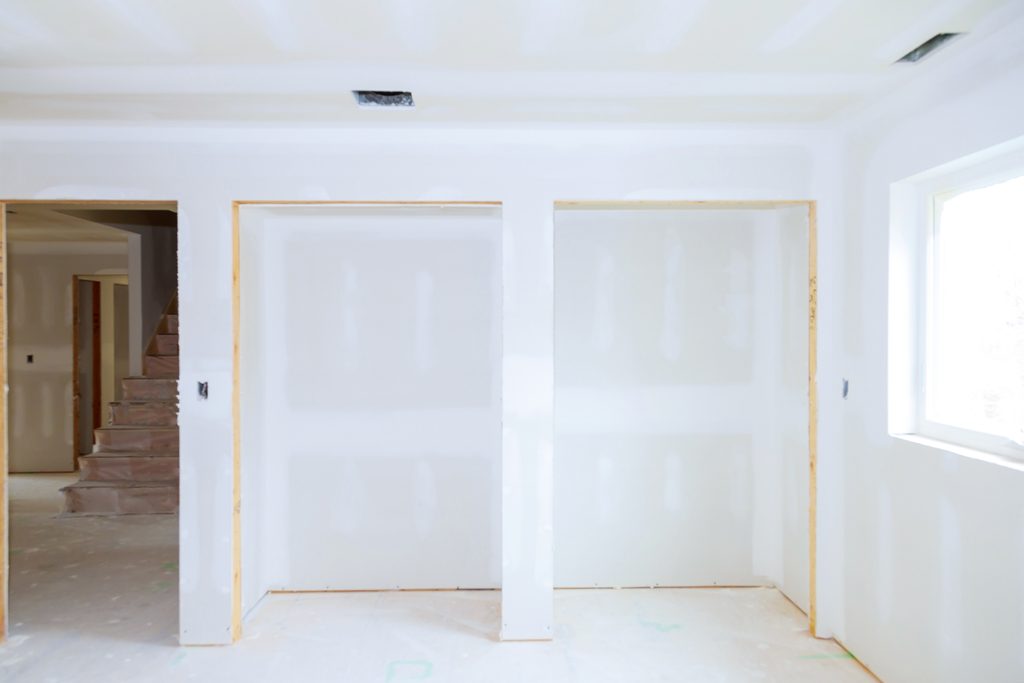
Quick Answer: A Level 4 drywall finish covers joints with two coats of compound and is the standard choice for flat paint in most homes and offices. A Level 5 drywall finish adds a full skim coat over the entire surface, which is recommended for gloss paint, enamel, or walls under harsh lighting. Specifying the wrong one either wastes budget or leads to a repaint.
Drywall finish levels sound technical, but the idea is simple: they describe how smooth a wall needs to be before paint goes on. Get it right, and your walls look flawless under the lights in a lobby or conference room. Get it wrong, and you’re either paying for smoothness nobody will notice, or watching every joint “photograph” through a fresh coat of paint.
At Allen Drywall, we help architects, general contractors, and builders in the Bay Area spec the right finish level before the walls even go up, so there are no surprises at walkthrough.
Where Do Drywall Finish Levels Come From?
The finish levels (0 through 5) come from GA-214, a standard jointly published by the Gypsum Association, AWCI, CPDA, and PDCA. Think of it as a shared language. When a general contractor, a drywall finisher, and a painter all reference GA-214, “smooth” means the same thing to everyone on the job.
Here’s the part that trips people up: these levels describe the surface the painter receives, not a quality grade for the finished paint job. A Level 5 drywall finish isn’t automatically “better.” It’s a specific scope of work, and it isn’t always necessary.
What a Level 4 Drywall Finish Includes
A Level 4 drywall finish is the everyday standard. It includes tape embedded in joint compound at every joint and interior angle, two separate coats of compound over flat joints, one additional coat at interior angles, and three coats over fastener heads and trim accessories. The surface comes out smooth, free of tool marks, and ready for primer.
This is the right call for flat paints, light textures, and most wall coverings. It’s why Level 4 shows up on the majority of residential bedrooms, hallways, and standard commercial interiors.
What a Level 5 Drywall Finish Adds
A Level 5 drywall finish includes everything in Level 4, plus a skim coat of joint compound (or a purpose-made skim material) applied across the entire surface. Finishers apply this by hand, by roll-and-scrape, or by spray.
That skim coat exists for one reason: compound and paper face absorb primer differently. Without it, joints can “band” or photograph through the paint, even on a wall that passes a straightedge test. This is why Level 5 is recommended for semi-gloss and enamel paints, non-textured flat paints, and walls under demanding lighting.
Porosity, Light, and Why Sheen Changes Everything
Picture a lobby wall under a row of wall-wash sconces, or a corridor catching raking daylight from a clerestory window. Flat paint hides a lot of sins. Eggshell starts to reveal them. Semi-gloss broadcasts every imperfection. That’s why the same wall can look perfect at 10 a.m. and rough by 4 p.m. when the sun angle shifts.
How to Decide Between Level 4 and Level 5
Ask these questions before you write the spec:
- What paint sheen is specified?
- Will any fixtures wash the wall with light?
- What’s the viewing distance and angle: a lobby feature wall or a back-of-house corridor?
- Is texture or wall covering going over it?
- What’s the owner’s tolerance for callbacks?
Room-by-Room Guidance
Level 4 typically works for bedrooms, utility areas, back-of-house spaces, and ceilings receiving texture. Level 5 is worth the investment in lobbies, reception areas, conference rooms, high-end great rooms, and retail or hospitality spaces with gloss or enamel paint. Many projects mix both levels, so document each one clearly by room on the finish schedule.
Cost, Schedule, and the Middle Ground
A skim coat adds a full pass across every square foot, which means more material, more dry time, and more sanding. Pricing Level 5 after the fact almost always costs more than specifying it up front. A high-build primer can sometimes bridge the gap, but it’s not a substitute for a true skim coat. Agree on this with your finisher and painter; don’t assume it.
Write It Into the Spec
Reference GA-214 by name, call out the finish level by room on your finish schedule, specify primer requirements alongside it, and define inspection conditions like lighting and timing for acceptance.
Get It Right the First Time
Allen Drywall has spent over 35 years helping Bay Area architects, builders, and GCs match the finish level to the space, from preconstruction review of lighting plans to skim coating and Level 5 application. Explore our taping and finishing services and let’s spec your next project right.
Frequently Asked Questions
Q: Is a Level 5 drywall finish always better than Level 4?
A: No. A Level 5 finish is a scope of work, not a quality upgrade. It’s necessary for gloss paint or critical lighting, but unnecessary spending in rooms with flat paint and standard lighting.
Q: How much more does a Level 5 finish cost?
A: It adds a full skim coat across the entire wall surface, plus added sanding and dry time, so expect higher labor and material costs meaningfully compared to Level 4.
Q: Can I mix finish levels on one project?
A: Yes. Many projects specify Level 5 in public-facing areas like lobbies and Level 4 in bedrooms or back-of-house spaces, as long as it’s documented clearly on the finish schedule.
Q: What happens if I leave the finish level unspecified?
A: It usually gets decided in the field, which raises the risk of mismatched expectations, callbacks, or a repaint once the walls are under real lighting.
